How to create content that Google likes
It is probably no surprise to you that Google is one of the most important platforms for internet searches today. To give you some context in just how important they are, I'll use an analogy from Star Wars. According to Net Market Share's data, almost 3 out of every 4 internet searches use Google.
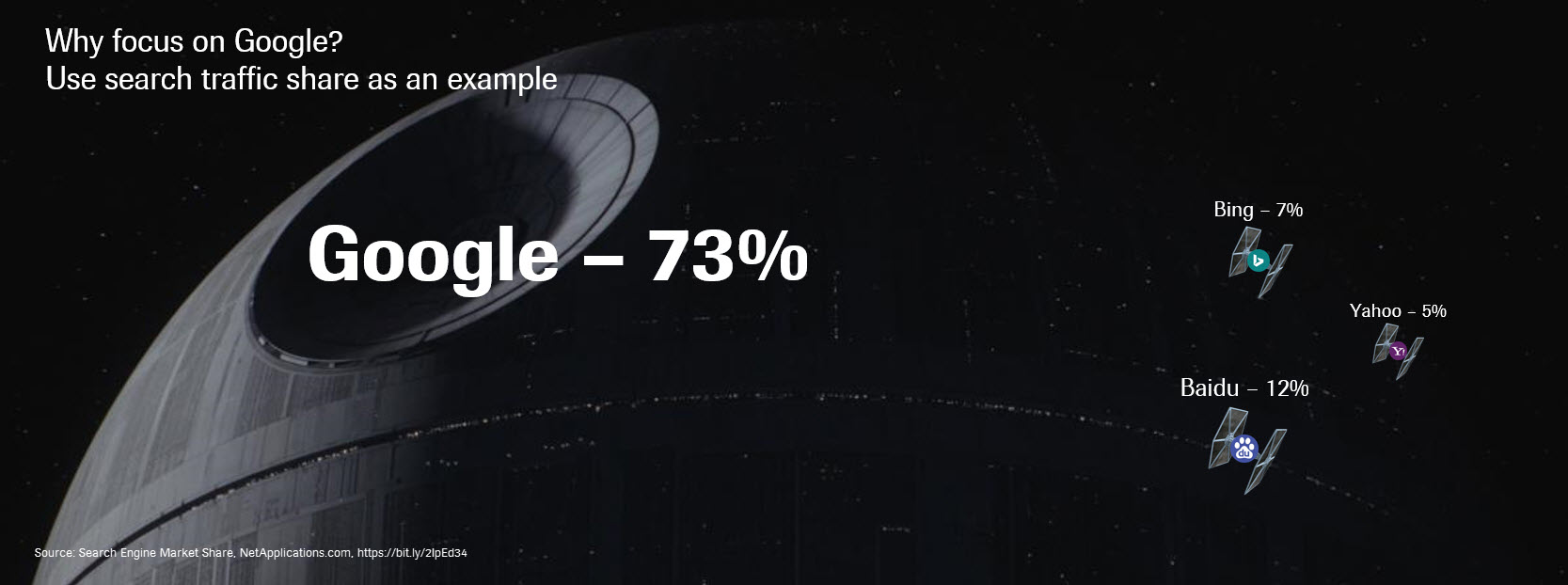
Now I am not saying that Google is an evil empire. On the contrary, they are very focused on providing good answers to the world's questions. So as a developer of products, services, and content we at RDC should create items that Google will easily find, understand and deliver to its users.
Optimization to Google search is your best bet.
Google continually scans or "crawls" or scans the web to understand what is out there. Here is how they explain it, "Crawling is the process by which Googlebot discovers new and updated pages to be added to the Google index. We use a huge set of computers to fetch (or "crawl") billions of pages on the web. The program that does the fetching is called Googlebot (also known as a robot, bot, or spider)." If we want our content to be seen we have to understand what the "bot" is looking for and will be able to process.
Page elements that will help the bot easily scan content.
Using these simple tips will help your content be found, crawled, and understood by Google. Then Google will better match your content to the questions people are asking. That is the best experience for users and makes your more visible. Why not squeeze every drop of benefit from the hard work you have put into developing your content.
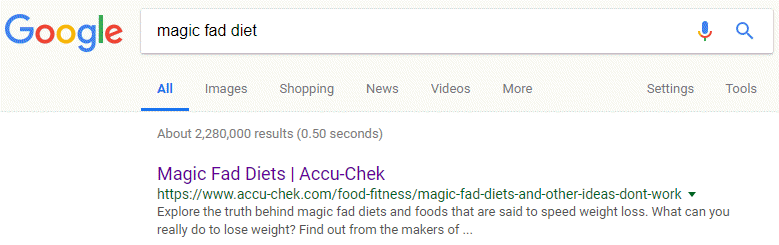
- Title tag: This is how Google can understand what the content is about. If we don’t put this in, we are essentially tying our hands behind our back. We would be missing big opportunities to grab Google's attention.
- URL: This is the web address that appears at the top of the browser. It is best if it is logical with the important keywords in it with dashes. The easier a URL is to read for a person to scan and understand, the easier it will be for a Googlebot. For example, an article URL like https://www.accu-chek.com/food-fitness/magic-fad-diets-and-other-ideas-dont-work is an excellent URL. It is clear and has the keywords that the customer may use in searching.
- Meta description: This is a small synopsis of the content (320ish characters). This is the small snippet that Google may show in the search results especially if the search words are actually used in the description. You can see how the description of the article includes the keywords Magic Fad and Diet
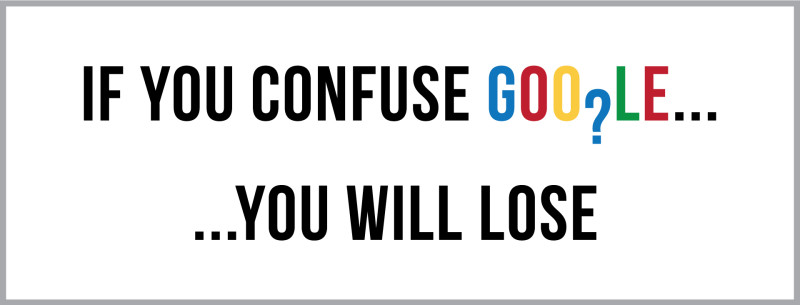
- H1 tag "headline": As much as we like clever and thought provoking, funny or artistic headlines, if they confuse Google, we lose. It is best if title our content the same way people ask questions; speak the same language as they do. For example a title like "the art and science of blood glucose meter choice" wouldn't tell Google what the article really aims to explain. A better title is "How to choose the best blood sugar meter for you."
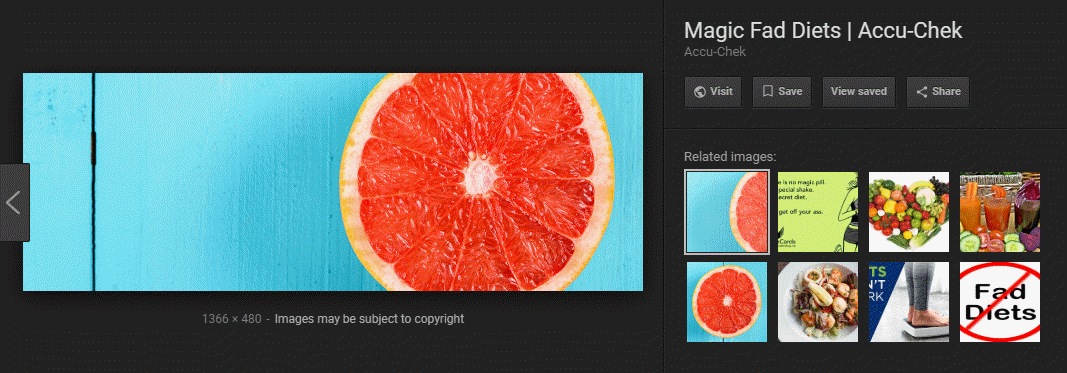
- Images: Google image search is very popular, so if we place good descriptions with our images, Google is more likely to find them and promote them. You worked hard to find the right image, let Google know what it is for. Here you can see that the image was tagged with the important words as well.