Google has said that in the past that it processes trillions of searches per year. With the use of internet mobile phones and traffic growing everyday, it's tough to say just how many searches are happening on a daily basis. Some say 5 billion; some say 7 or even 10 billion per day. What is certain is that Google is highly dependent on advertising revenues to keep the behemoth running. Advertising is the fuel that keeps the internet running. Most of those ads are search engine text ads. In just the US alone, it was reported that 80% of ad spend is in search ads.
Given that competitive space, it is important for us to be good reviewers of the ads that our agency delivers to us. The Global Media Program strives to create the best - most clickable ads for our affiliate partners. Here is some information that will help you partner with us.
Anatomy of a text ad
The text ad is just like it sounds, groups of text. It has three basic parts: headline text, display URL text, and description text. Google has made improvements to this structure so that ads read more like sentences and complete thoughts.
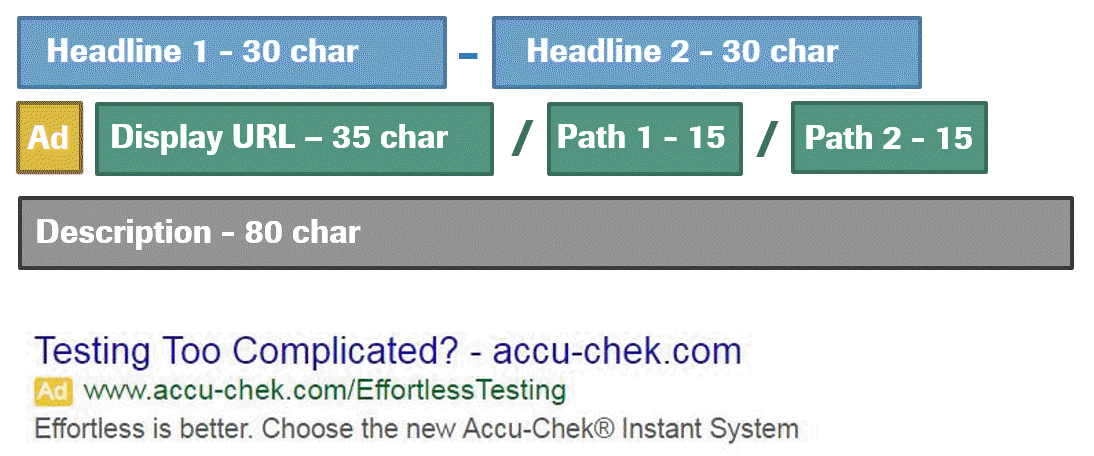
Does this ad answer your question? Would you click it?
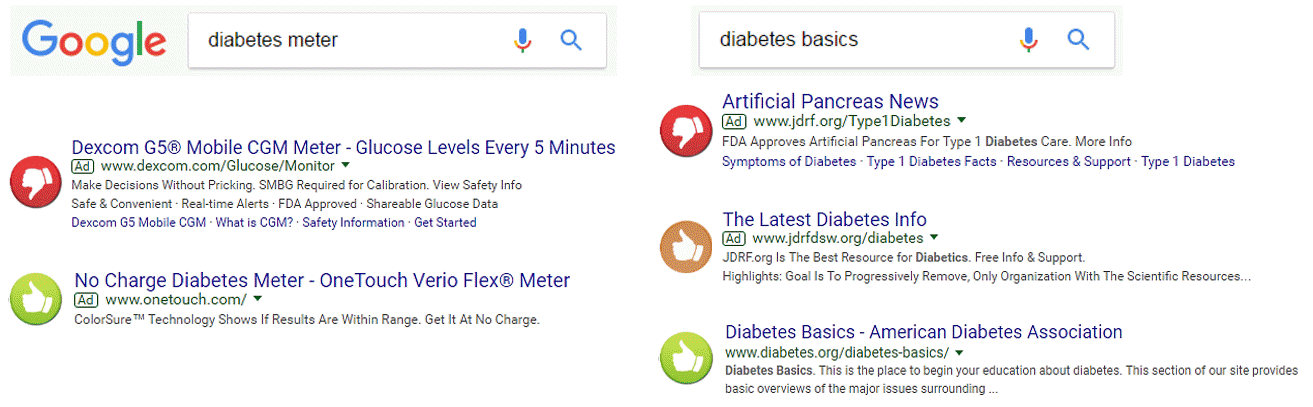
Our ads will perform best if they match what the user is searching for and use the same words they use. Using the image example below, if a potential customer types “diabetes meter” into Google do the ads potentially meet the need? If she is doing general discovery research on diabetes meters, is she thinking about the terms SMBG, calibration, Real-time Alerts, or FDA Approval? If she clicks on this ad and goes to the page, then Dexcom pays for that. But if she is confused and then bounces off the page after a second or two – that is wasted money?
The next one may be closer as it uses the words “diabetes meter” in the ad. In this example, he is looking for "diabetes basics". Is he ready to hear about artificial pancreas? The keys to success here lie in understanding what our customers need, how they ask questions, and how to word our answers. Ultimately we want them to know that we understand them and want to provide some relief (which can come through even this) in every experience.
Compelling Ad copy.
Google says that "your text ads should be specific, relevant, attractive, and empowering."Here are a few items they recommend.
- We can highlight what makes us unique. Showcase the products, services, or offers that make you competitive. What does RDC or Accu-Chek offer that others don't?
- We can include promotions, and exclusives. People need help making decisions. We can provide information that helps them decide. Do we have a deal for them? Can we make the purchase decision easier for them?
- We can empower our customers to take action. Use some of your text to drive an action. Tell people what they can do next. Calls-to-action like purchase, contact us, order, browse, or sign up make clear what the next steps are.
- We can match your ad to your landing page. Hopefully the user will click on our ad. When they do, they need to land on a page that makes sense. Does the page use the same language as the ad and lead them further down the purchase decision? People might leave (or bounce from) our website if they don’t find what they expect.
Extend the ad with... Extensions.
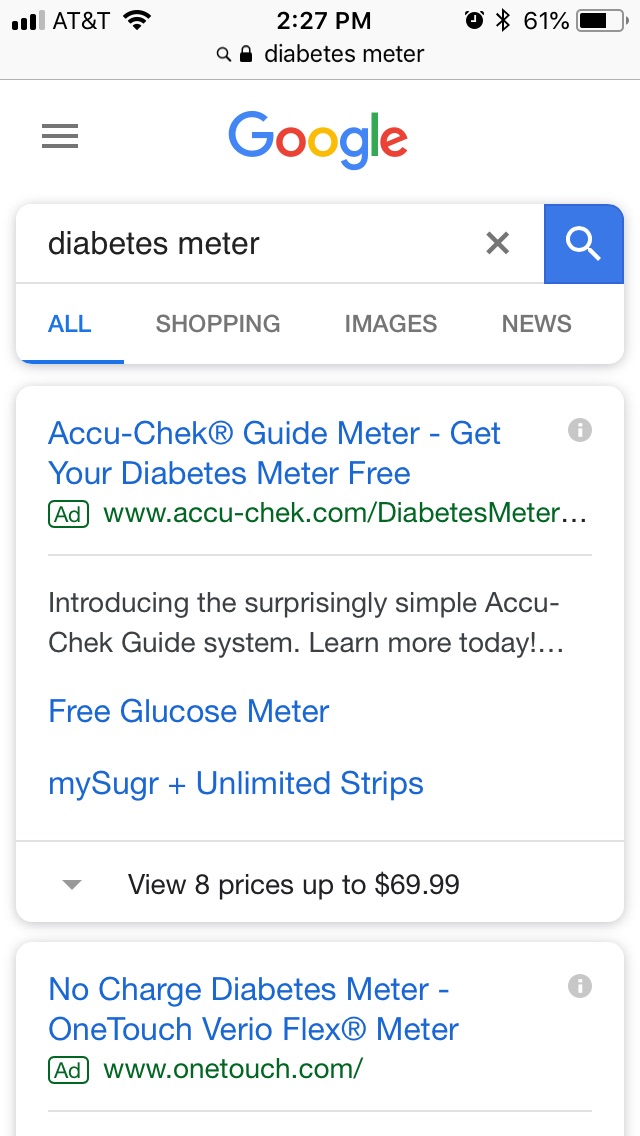
The mobile screen is a small space, so taking up the most room on the screen is best. Ad extensions do exactly what the say. They expand or extend your ad with more information. "They typically increase an ad's click-through-rate by several percentage points. Extension formats include call buttons, location information, links to specific parts of your website, additional text, and more." You can see in the example how this Accu-Chek Guide ad takes up more space with extensions. It pushes the OneTouch ad virtually off the page.
What do I do next?
You can use the tips here to spot good and bad ads. The great part is that our Global Media Program can do all of this for you and leave you to focus on the go-to-market strategy for your products. We're pros at this. Just contact us and we’ll lead you through building a plan to meet business needs.