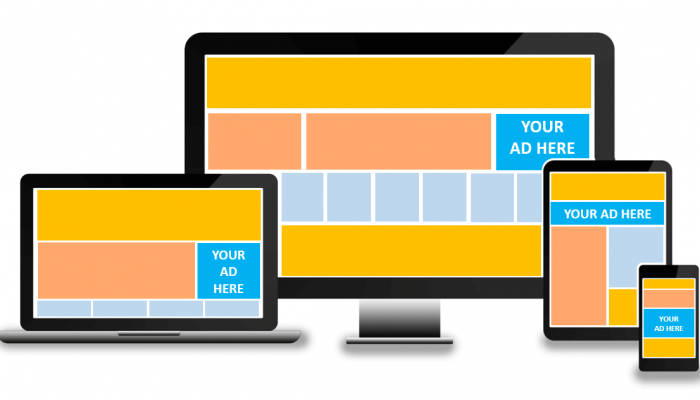
There are many types of digital media ads in today’s media market. One of the more popular types is called Display. It is called display simply because these ads are “displayed” on various websites. We have seen them for years just in other formats like billboards on the side of the road or print ads in the newspaper or magazine. Since we are so digitally focused in our communication now, digital display ads have grown in popularity and are taking the place of traditional ads. Display ads now account for nearly 30% of all digital ad spending (emarketer.com)
You may be asking, “are banner ads the same thing as display ads?” In a word – yes. We have heard the word banner used a lot because the size and shapes of display ads often look like banners that appear at the top of an app or web page.
Digital display advertising is the tactic of renting the available ad space on a website(s) other than your own. They are a nice alternative to search text ads because they are more visually rich and can enable a brand to show more creativity. They can include items such as text, images, animation, video, and audio. The main purpose of display advertising is to grab the viewers’ attention with a more stimulating message and to lead that person to visit the website.
Not all display ads are alike?
Display ads can be made in various shapes and sizes. But not all sizes perform the same. One source says that “89% of all ad impressions are made up of these 4 sizes:
- 300×250 Medium Rectangle 40%,
- 728×90 Leaderboard 25%,
- 320×50 Mobile Leaderboard 12%,
- and 160×600 Wide Skyscraper; 12%”
How do I display ads on websites?
There are different ways to place your ad on other websites:
-
Use the Google Display Network – The Display Network (or GDN) includes a collection of Google websites, partner sites, and mobile sites and apps that show AdWords ads matched to the content on a given page. It offers options to target ads to specific groups of people based on their interests and browsing websites about similar topics, concepts, or themes. You can not only list the kinds of site topics you want your ad to appear on (such as health sites, diabetes related sites) but you can also block your ad from appearing on sites that are not aligned to your brand (dating, politics, etc)
-
Buy ad space on a specific site – This is also called a Direct Buy. You can do this by contacting a publisher or network owner directly to purchase the ad space, or “inventory”. This can be especially valuable if you know that your target audience is focusing on a single publisher. For example; if a lot of your potential customers are going to diabetes,co.uk or webmd.com you could look into what it would cost to purchase ad space on those particular sites.
- Programmatic Display – This is much the same as a network buy except that it is automated. Using a Demand Side Platform advertising or DSP, computers continually analyse the ad inventory marketing and make ad purchases in real-time. Instead of choosing who you want to see your ad or where to place your ads, you hand that over to the computer. This may sound unwise, but programmatic is able to quickly place ads (milliseconds) in multiple places according to your targeting and specifications. It is a really good platform for brand level awareness campaigns because of its broad reach.
Display advertising is most effective when the ad you place makes sense with the topics of the sites it appears on. If you would like to know more about how to get started in display, our global media program can help. Just contact us and we’ll lead you through building a plan and campaigns to meet business needs.